Night sleep | Common problem
Split Nights in Babies: Why Your Baby Is Awake for Hours in the Middle of the Night
A split night is not a normal quick wake-up. It is when your baby is fully awake for a long stretch overnight, often happy, alert, and completely done with sleep. The cause is usually schedule-related.
By Baby Sleep Tools · About our content
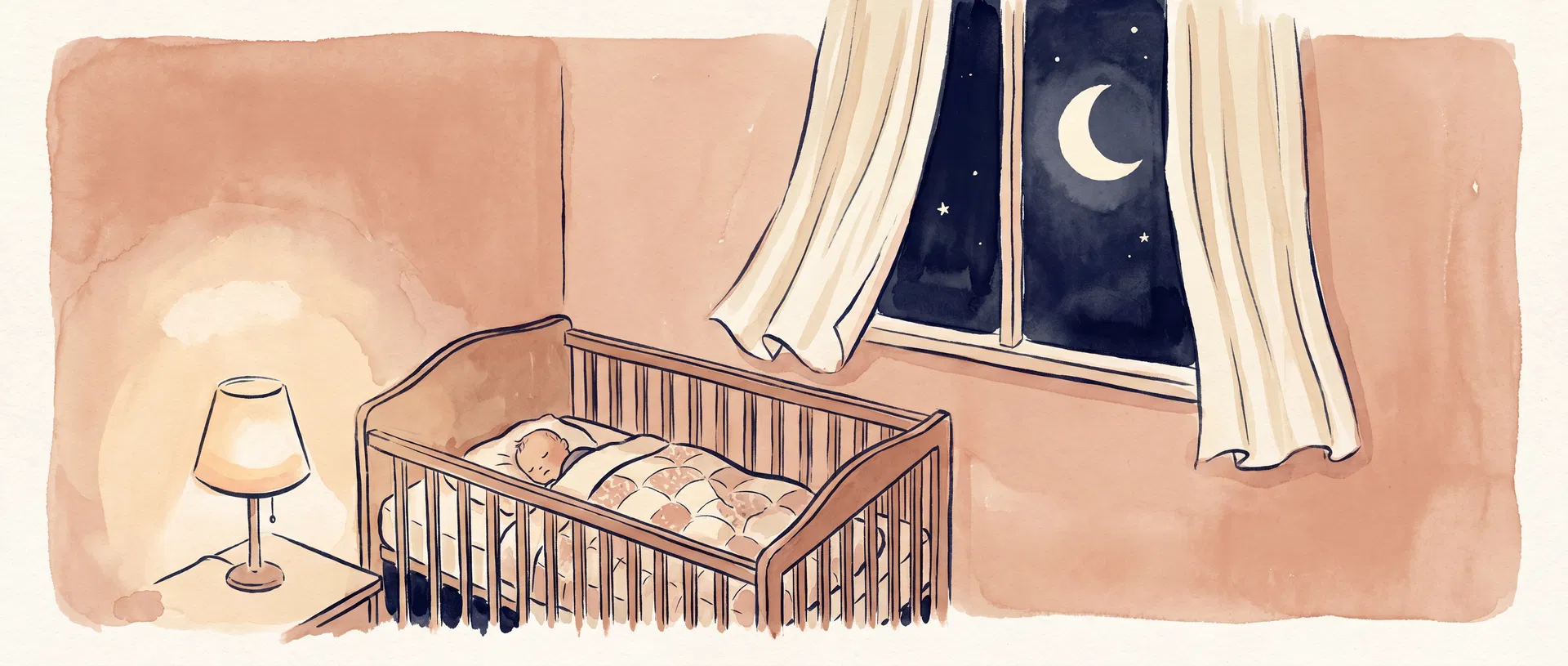
What a split night actually is
A split night is when your baby wakes in the middle of the night and stays awake for a long time, often one to three hours. This is not the same as a normal feed-and-settle wake. In a split night, sleep has clearly broken.
Many babies in a split night do not even seem distressed at first. They may be playful, alert, or just deeply uninterested in going back to sleep.
Why split nights happen
Split nights are often a sign that the total day is not balanced. The most common pattern is that your baby got enough rest to stop sleeping, but not enough schedule support to keep that wakefulness in the daytime.
That is why split nights often show up in babies who are:
- undertired at bedtime
- getting too much daytime sleep for their age
- still on an old nap count that no longer fits
- napping too late into the afternoon
The most common causes
1. Undertiredness
This is the biggest one. If a baby does not have enough sleep pressure at bedtime, that awake time often shows up overnight instead.
2. Too much total daytime sleep
If naps are very long or a late nap is still hanging around, night sleep may lose some of its pressure.
3. Nap transition timing
Split nights are especially common when the old nap schedule no longer fits, but the new one has not been set properly.
4. Bedtime too early for the day they had
This is less common than parents think, but it does happen. If bedtime lands too early after a strong nap day, your baby may treat part of the night like extra wake time.
How to fix split nights
Look at the whole day, not just the night
Split nights are almost always easier to solve by fixing the schedule than by changing what you do at 2 AM.
Check wake windows and nap count
Use the wake window calculator to check whether the day is running early, then rebuild the full day with the nap schedule generator if needed.
Cap late naps if they are pushing bedtime
A nap that runs too late can quietly steal pressure from the first half of the night. This is especially common in babies hovering between nap counts.
Keep the overnight environment dark and boring
You still want the split night to feel like night, even while you work on the real cause the next day.
What changes by age
- Under 4 months: split nights are less often true schedule issues and more often tied to immature rhythms or feeds.
- 4 to 12 months: schedule mismatch is the most common driver.
- 12+ months: split nights often show up around nap transitions or when one nap is too long and too late.
"A split night is usually daytime math showing up after midnight."
Frequently asked questions
Are split nights caused by overtiredness or undertiredness?
More often undertiredness, though overtiredness can sometimes add early waking or other sleep fragmentation around the edges.
How long does it take to fix split nights?
If the cause is schedule-related, many babies improve within several days to two weeks of consistent changes.
Should I make bedtime later?
Sometimes that helps, but only when bedtime was genuinely early for the amount of daytime sleep your baby got. Often the bigger fix is elsewhere in the day.
Do split nights happen during nap transitions?
Very often. They are one of the clearest signs that the old nap structure may no longer be fitting cleanly.